
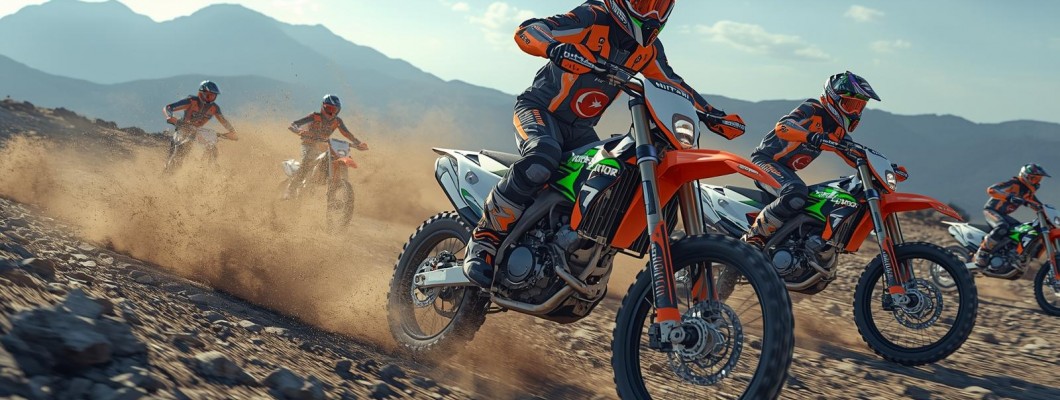
Enduro motorcycles are designed to perform in demanding environments, but certain components remain structurally vulnerable when exposed to repeated impacts and harsh terrain. One of the most commonly damaged parts in enduro riding is the radiator system. While modern KTM, Husqvarna, and GasGas models are equipped with lightweight stock radiator brackets, these mounts are not engineered to handle the continuous stress of technical off-road riding.
This article explains the differences between stock radiator brackets and reinforced radiator guards, and why reinforcement is essential for serious enduro use.
Understanding the Role of the Radiator System
The radiator’s primary function is to regulate engine temperature by dissipating heat through airflow and coolant circulation. In enduro riding, the engine often operates at high temperatures, especially during slow-speed technical sections where airflow is limited.
For the cooling system to function properly, the radiator must remain:
Structurally aligned
Free from deformation
Securely mounted to the frame
Any damage or misalignment can reduce cooling efficiency and increase mechanical risk.
Stock Radiator Brackets: Designed for Weight, Not Impact
Stock radiator brackets are typically made from thin aluminum or lightweight composite materials. Their main design priorities are:
Low weight
Minimal bulk
Basic structural support
While this approach works well for casual trail riding, it becomes a limitation in true enduro conditions.
Common Weaknesses of Stock Brackets
Limited resistance to side impacts
Susceptibility to bending during low-speed falls
Lack of rear or lateral support
Structural deformation after repeated stress
Once a stock bracket bends, the radiator shifts out of alignment. This increases stress on hoses, mounting points, and the radiator core itself.
Why Radiators Are Frequently Damaged in Enduro Riding
Radiator damage rarely occurs from a single major crash. Instead, it develops through cumulative stress caused by:
Side falls on rocky terrain
Contact with trees, branches, or trail markers
Repeated pressure during tight single-track riding
Minor impacts that gradually weaken mounting points
Because stock brackets offer little reinforcement, even small forces can lead to progressive deformation.
Radiator Guards: Structural Reinforcement Where It Matters
Radiator guards are designed to address the limitations of stock mounts by adding a rigid external structure around the radiator. Rather than relying solely on the factory bracket, a guard distributes impact forces across a larger area and redirects stress away from the radiator core.
Key Functions of Radiator Guards
Prevent inward bending of the radiator
Reinforce weak mounting points
Maintain alignment under side load
Protect fins from debris and impacts
High-quality radiator guards typically use CNC-machined aluminum and are engineered to fit the specific frame geometry of KTM, Husqvarna, and GasGas models.
Structural Differences: Guard vs Bracket
The difference between a stock bracket and a radiator guard lies in how force is managed.
Stock Brackets
Single-point or limited mounting
Minimal lateral reinforcement
Deform easily under pressure
Radiator Guards
Multi-point frame attachment
Front and rear support structure
Rigid side-impact resistance
Maintains radiator geometry
This structural reinforcement dramatically reduces the likelihood of radiator distortion during normal enduro riding.
Impact on Cooling Performance
A bent radiator does not always leak immediately, but even minor deformation can reduce cooling efficiency. Restricted airflow, pinched coolant channels, and misaligned hoses all contribute to increased operating temperatures.
By keeping the radiator properly aligned, guards help maintain:
Consistent airflow
Stable coolant circulation
Reliable temperature control
This is particularly important during slow, technical riding where thermal management is already under stress.
Why Reinforcement Is Essential for KTM, Husqvarna and GasGas Models
KTM, Husqvarna, and GasGas enduro platforms share similar frame layouts and radiator positioning. While this common design improves performance and weight balance, it also means that the radiators sit exposed on the sides of the bike.
Radiator guards engineered for these platforms account for:
Frame geometry
Radiator angle and clearance
Hose routing
Tank and shroud alignment
When properly designed, reinforcement does not interfere with airflow or maintenance access.
Long-Term Reliability and Rider Confidence
One of the most overlooked benefits of radiator guards is the confidence they provide. Riders equipped with reinforced cooling systems are less likely to hesitate in tight sections or avoid challenging lines due to fear of damage.
A reinforced radiator system allows riders to:
Commit to technical lines
Maintain momentum over obstacles
Focus on riding technique rather than mechanical risk
For beginners and experienced riders alike, this confidence translates into smoother, more controlled riding.
Conclusion
Stock radiator brackets are designed for light-duty use and weight reduction, not repeated impacts or aggressive off-road riding. In enduro conditions, these limitations become apparent quickly. Radiator guards address this weakness by reinforcing the radiator structure, maintaining alignment, and protecting critical cooling components from damage.
For riders who regularly encounter rocky terrain, narrow trails, and technical obstacles, radiator reinforcement is not an optional upgrade—it is a necessary step toward reliability, performance, and long-term durability. Installing radiator guards ensures that the cooling system remains functional under pressure, allowing the motorcycle to perform consistently in the demanding world of enduro riding.
Leave a Comment