
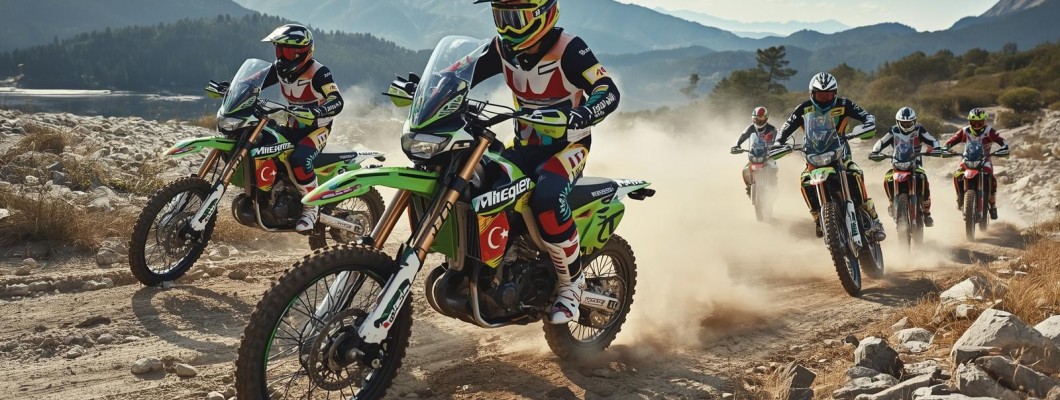
Enduro riding demands components that can withstand constant impacts, vibration, and extreme stress. Rocks, roots, steep climbs, and repeated ground contact expose motorcycle parts to forces far beyond what standard riding conditions require. In this environment, durability is not optional—it is essential.
One of the most important factors behind durable enduro components is CNC machining. This manufacturing method has transformed how high-performance motorcycle parts are designed, produced, and refined. This article explains how CNC machining improves durability in enduro motorcycle parts and why it has become the standard for serious off-road riding.
What Is CNC Machining and Why It Matters in Enduro
CNC (Computer Numerical Control) machining is a manufacturing process where parts are precisely cut and shaped from solid material blocks using computer-controlled tools. Unlike casting or stamping, CNC machining allows for exact tolerances, consistent geometry, and superior structural integrity.
In enduro riding, this level of precision directly translates into:
Stronger components
Better fitment
Increased resistance to impact and fatigue
Longer service life under harsh conditions
Material Integrity: Strength Starts at the Core
CNC-machined enduro parts are typically produced from high-grade aluminum alloys such as 6061 or 7075. These materials are chosen for their excellent strength-to-weight ratio and resistance to deformation.
Because CNC parts are machined from solid billet material:
Internal weaknesses common in cast parts are eliminated
Structural density remains consistent throughout the component
Stress points can be engineered rather than guessed
This is particularly important for protection parts like skid plates, radiator guards, and foot pegs.
To understand why certain protection parts are critical, see:
Why Skid Plates Are the Most Important Protection Part for Enduro BikesPrecision Fitment Reduces Stress and Vibration
Poorly fitting parts often fail not because of direct impact, but due to vibration, misalignment, and uneven load distribution. CNC machining allows manufacturers to produce parts that match the exact dimensions of the motorcycle frame and mounting points.
Precise fitment results in:
Even load distribution
Reduced vibration
Less stress on mounting bolts
Improved long-term durability
This is especially important for components such as radiator guards, where alignment directly affects cooling performance.
For more insight, see:
Radiator Guards vs Stock Brackets: Why Reinforcement Matters in EnduroImproved Impact Resistance Through Design Control
CNC machining allows engineers to control thickness, reinforcement zones, and structural geometry with extreme accuracy. This means parts can be designed to absorb and distribute impact forces rather than transferring them directly to the motorcycle.
Examples include:
Skid plates with reinforced side wings
Radiator guards with rear support structures
Foot pegs with optimized load-bearing platforms
These design advantages are difficult to achieve with traditional manufacturing methods.
Consistency Across Every Part Produced
One of the most overlooked benefits of CNC machining is consistency. Every part produced follows the same digital blueprint, ensuring identical dimensions and performance characteristics.
For enduro riders, this means:
Reliable fitment across KTM, Husqvarna, and GasGas models
Predictable performance under stress
Confidence that replacement parts match original specifications
Consistency is a major factor in building trust between riders and manufacturers.
CNC Machining and Rider Control Components
Control components such as foot pegs play a critical role in rider stability. CNC machining allows foot pegs to be produced with aggressive, uniform tooth profiles and wide platforms that enhance grip and balance.
For a deeper explanation, see:
Foot Peg Upgrade Guide: Why Wider Pegs Improve Control in Enduro RidingThese upgrades improve rider confidence and reduce fatigue, especially during long technical sections.
Durability Under Repeated Stress
Enduro parts rarely fail from a single impact. Instead, they degrade gradually due to repeated stress, vibration, and micro-impacts. CNC-machined components are designed with this reality in mind.
By controlling material flow, thickness transitions, and stress distribution, CNC machining significantly improves fatigue resistance—one of the most important factors in long-term durability.
Why CNC Matters More in Enduro Than Other Riding Styles
Unlike motocross or road riding, enduro places continuous and unpredictable stress on motorcycle components. Parts must perform reliably across long rides, variable speeds, and uneven terrain.
CNC machining provides the structural confidence required for:
Hard enduro
Technical trail riding
Long-distance off-road exploration
It ensures that components do not simply survive impacts, but continue to perform consistently over time.
Conclusion
CNC machining has become a cornerstone of high-quality enduro motorcycle parts because it directly addresses the demands of off-road riding. By improving material integrity, fitment precision, impact resistance, and consistency, CNC-machined components offer durability that traditional manufacturing methods cannot match.
For riders who prioritize reliability, control, and long-term performance, CNC machining is not just a production method—it is a guarantee of quality.
To learn more about CNC-machined enduro protection and control components designed for demanding terrain, visit the Mitigator official website:
Leave a Comment