
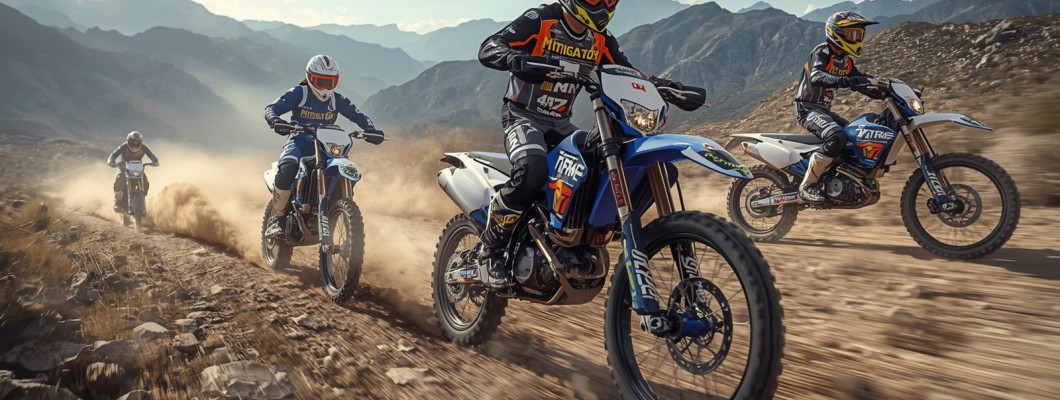
What Happens to an Unprotected Enduro Bike Over a Full Season
Single rides rarely show the full cost of riding without protection.
The real damage appears over time, as small impacts accumulate across a full riding season.
Hard enduro riding exposes the same components to repeated stress:
- Engine bottom
- Cooling system
- Engine sides
- Controls
- Rider contact points
Without protection, damage compounds gradually until failure becomes unavoidable.
Why One Season Tells the Real Story
Hard enduro damage is rarely immediate.
It develops through repetition, not one dramatic crash.
A full season reveals how unprotected components degrade under constant stress.
Early Season: Minor Impacts Begin to Add Up
At the beginning of the season, an unprotected bike may appear fine.
What Typically Happens
- Light scrapes on the engine bottom
- Minor radiator fin damage
- Small bends in mounts or brackets
These issues are often ignored because the bike still runs.
Why This Matters
Small damage weakens components.
The next impact does not hit a fresh part—it hits a compromised one.
Mid-Season: Hidden Problems Surface
As the season progresses, cumulative damage becomes visible.
Common Mid-Season Issues
- Radiator alignment issues
- Small oil seepage from engine covers
- Loose mounting points
- Reduced cooling efficiency
At this stage, problems begin affecting reliability, not just appearance.
Late Season: Ride-Ending Failures Appear
By late season, unprotected bikes often experience serious failures.
Typical Failures
- Cracked engine cases from bottom impacts
- Radiator leaks after repeated stress
- Engine cover fractures from side falls
- Broken controls from accumulated impacts
These failures often occur during normal riding, not extreme crashes.
Why Cumulative Damage Is So Dangerous
Hard enduro damage is rarely caused by one big crash.
It is caused by many small hits weakening components over time.
Without protection:
- Stress concentrates on the same points
- Materials fatigue faster
- Failures happen suddenly
Protection breaks this cycle by absorbing and distributing impact forces.
Protected vs Unprotected Bike Over One Season
| Area | Unprotected Bike | Protected Bike |
|---|---|---|
| Engine bottom | Progressive wear | Impact absorbed |
| Radiator | Gradual deformation | Maintains alignment |
| Engine sides | Crack risk increases | Guarded surfaces |
| Controls | Frequent breakage | Reliable operation |
| Downtime | Increasing | Minimal |
Protection changes how a bike ages through the season.
The Financial Impact Over a Season
Unprotected bikes often incur:
- Multiple small repairs
- One or more major failures
- Lost riding days
- Early replacement of components
Protected bikes experience:
- Predictable wear on protection parts
- Fewer unexpected repairs
- Consistent riding availability
Season-long costs favor protection every time.
Why Riders Regret Waiting Until Next Season
Many riders plan to add protection later.
Unfortunately, later often means:
- After damage has already occurred
- After a ruined riding weekend
- After an expensive repair
Protection is most effective before the first impact, not after the first failure.
Final Thoughts
A full season of hard enduro riding reveals the true cost of riding unprotected.
Damage does not appear all at once—it accumulates silently.
Protection parts slow wear, prevent cumulative stress, protect critical components, and preserve long-term reliability.
Over a full season, protection is not an upgrade. It is preservation.
Protect Your Bike for the Entire Season with MitigatorShop
Prepare your enduro bike for a full season of hard riding with bike-specific protection parts:
- Reinforced skid plates, radiator guards, cage guards, handguards, and foot pegs
- Designs built to handle season-long abuse
- Secure checkout and fast worldwide shipping
Leave a Comment