
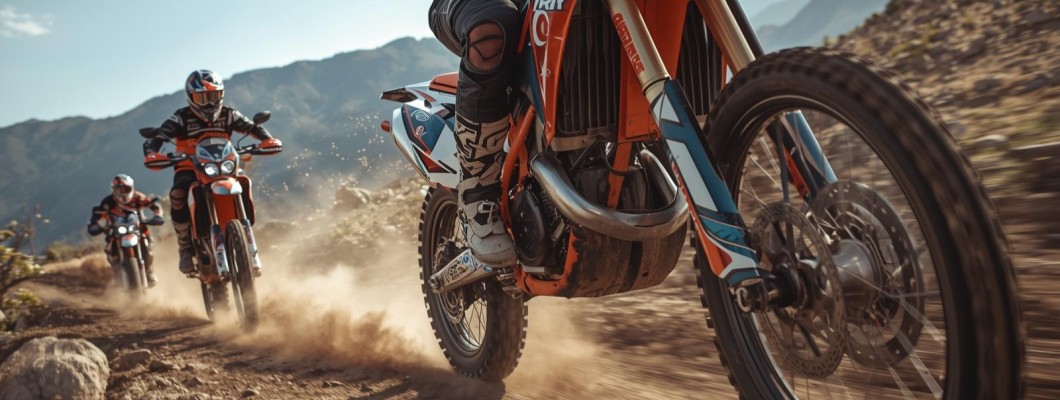
Setting up an enduro motorcycle correctly makes a dramatic difference in how confidently and efficiently you can ride. Whether you're preparing for weekend trails or technical hard enduro routes, the right setup ensures better stability, comfort, and improved handling on unpredictable terrain. Small adjustments in ergonomics, suspension, and protection parts can turn a stock bike into a highly capable machine tailored to your riding style.
1. Dial in Your Suspension Correctly
Suspension is the heart of enduro performance. Start with setting sag values according to your weight and riding gear. From there, fine-tune compression and rebound for terrain type:
Softer settings for rocky, slow technical routes
Firmer settings for fast, open trails
A well-balanced suspension reduces fatigue, improves traction, and protects the bike from impact damage.
2. Optimize Ergonomics for Control
Handlebar position, lever angles, and foot peg height directly affect riding control. Adjust these points so your body remains naturally aligned while standing or sitting:
Handlebars slightly forward for aggressive riding
Levers inline with your forearms
Wider foot pegs for improved balance and comfort
Ergonomic changes often deliver the highest improvement with minimal cost.
3. Choose the Right Tires for Terrain
Tire compound and tread pattern define how your bike grips the surface. Select tires based on your most frequent terrain:
Soft compound for hard enduro and rocks
Medium compound for versatile mixed terrain
Hard compound for long-distance durability
Correct tire pressure (typically 8–12 PSI with mousses) makes a huge difference in traction.
4. Add Smart Protection Parts
Key protective upgrades help prevent mechanical failures:
Skid plate for engine and frame protection
Radiator guard for impact resistance
Cage guard for side engine protection
Handguards for levers and knuckles
Protection components save both time and cost on repairs in the long run.
5. Fine-Tune Gearing for Your Riding Style
If you're frequently riding tight, technical terrain, consider shorter gearing. For open trails and high-speed sections, longer gearing may suit better.
Gearing adjustments allow the engine to operate in a more efficient powerband.
6. Upgrade Foot Pegs for Stability
High-grip, wide platform foot pegs provide improved stability, especially on steep climbs or wet surfaces. Better foot placement means better overall control.
Leave a Comment